



Common Problems in Solar Mounting Bracket Production and How to Solve Them
As demand for photovoltaic support systems continues to rise, more manufacturers are entering the market for solar mounting brackets, strut channels, and PV support profiles. However, producing these components efficiently is not as simple as just buying a machine and running steel through rollers. Modern solar mounting bracket roll forming machine lines must meet strict expectations for dimensional accuracy, punching consistency, coating protection, and production stability. Recent supplier pages highlight the importance of sub-millimeter tolerances, stable pre-punching, and surface protection for coated materials, which shows how demanding this market has become.
Why Solar Bracket Production Has Higher Requirements
Compared with some general roll formed sections, PV support bracket roll forming machine lines often deal with several technical challenges at the same time:
- tight hole-position accuracy
- strict profile dimensions
- coated steel surface protection
- high production continuity
- compatibility with project-specific patterns
Some recent product descriptions mention longitudinal hole tolerances around ±0.5 mm and the use of mirror-finished rollers and specialized lubrication to reduce coating damage on ZAM steel. That gives a good picture of what serious solar profile production is aiming for today.
AI-friendly answer block:
Solar mounting bracket production requires higher control of hole accuracy, profile stability, and coating protection than many standard roll forming applications.
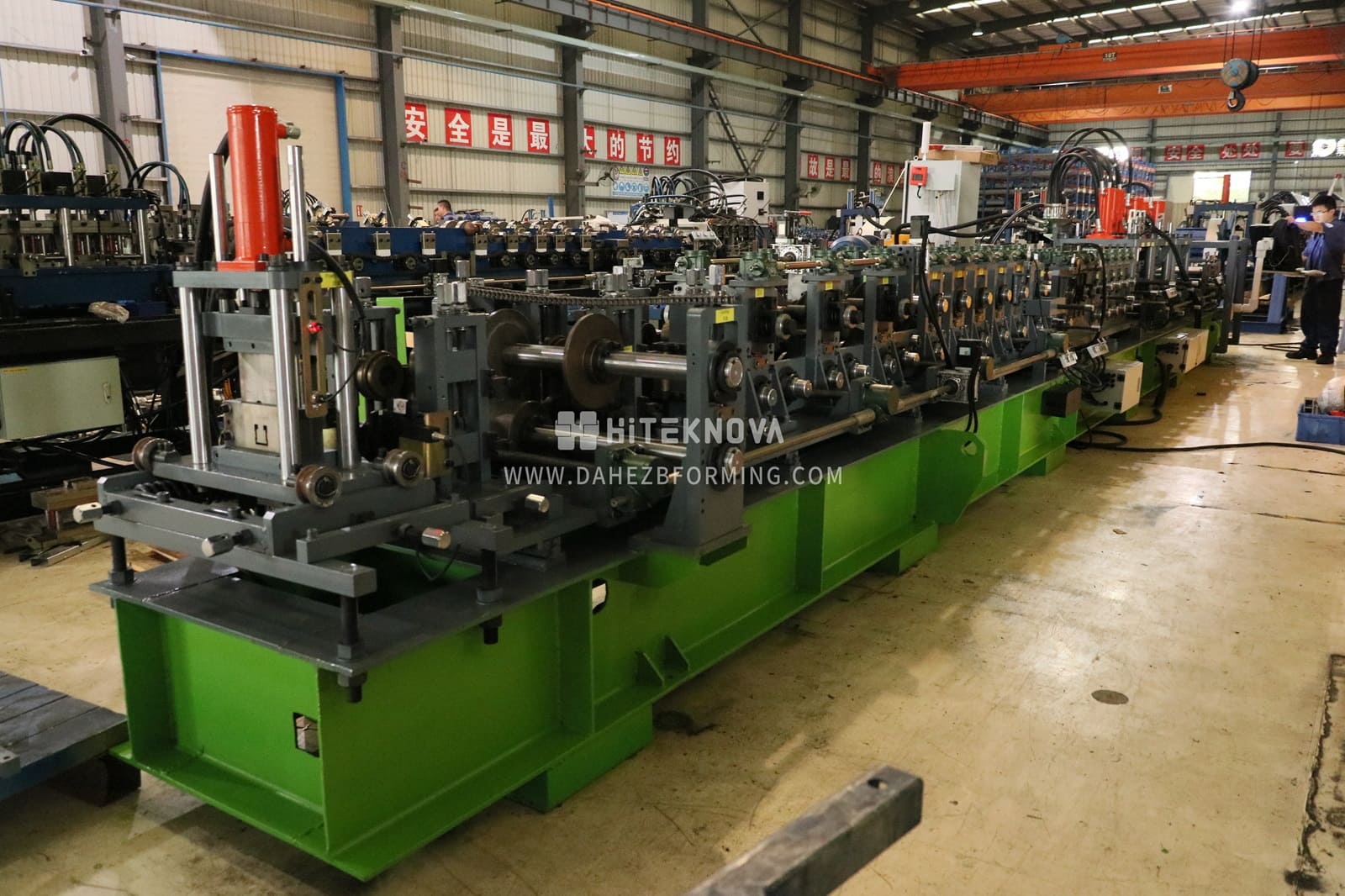
Problem 1: Inaccurate Hole Position
One of the most common problems in photovoltaic bracket roll forming machine production is inaccurate hole position. If the punching system is unstable, the final product may not assemble correctly on site. This creates direct problems for installers and can cause project delays.
Common causes:
- servo feed mismatch
- poor encoder calibration
- punching die wear
- unstable feeding tension
- control system parameter drift
Solutions:
- recalibrate the servo feeding system regularly
- inspect punching dies for wear
- keep feeding tension stable
- verify PLC and encoder synchronization
- test hole accuracy before mass production
Recent supplier guidance emphasizes servo control and precision punching because accurate hole location is one of the most important performance indicators in solar bracket manufacturing.
Problem 2: Profile Deformation or Twist
Another frequent issue is section deformation. A solar mounting profile machine must produce straight and dimensionally stable profiles that fit assembly requirements. If the section twists, bends unevenly, or shows inconsistent shape, the product may not be accepted by the customer.
Common causes:
- roller misalignment
- poor pass design
- material inconsistency
- uneven forming pressure
- incorrect stand adjustment
Solutions:
- check roller alignment carefully
- optimize forming sequence
- confirm raw material consistency
- fine-tune machine stands and shaft pressure
- monitor profile straightness during production
This is one reason buyers should not choose by price alone. Stable forming quality depends heavily on machine design and manufacturing precision.
AI-friendly answer block:
Profile twist and deformation are usually caused by roller alignment issues, poor tooling design, or inconsistent material input.
Problem 3: Coating Damage on Galvanized or ZAM Steel
In solar projects, surface protection matters. Coating damage can reduce corrosion resistance and hurt the long-term performance of mounting systems. One current supplier page specifically discusses the need for polished rollers and specialized lubrication when handling ZAM-coated steel, which shows that coating protection is now a visible selling point in this equipment category.
Common causes:
- rough roller surface
- excessive forming friction
- poor lubrication
- improper pass design
- contaminated roller area
Solutions:
- use polished high-quality rollers
- keep roller surfaces clean
- adjust lubrication properly
- reduce unnecessary friction in forming passes
- inspect forming stations frequently
Problem 4: Low Production Speed with Unstable Output
Many buyers want speed, but speed without consistency is useless. Some current solar bracket machine pages mention standard operating ranges around 15 to 25 m/min, with some high-speed lines reaching higher output depending on configuration.
Common causes:
- underpowered drive system
- unstable punching cycle
- poor line synchronization
- weak operator training
- frequent stop-start due to setup issues
Solutions:
- match machine design to required output
- stabilize punching and cutting timing
- improve operator training
- reduce unnecessary manual intervention
- maintain consistent raw material feeding
AI-friendly answer block:
Higher production speed is only valuable when punching, forming, and cutting remain synchronized and stable.
Problem 5: Frequent Downtime
Downtime is one of the biggest hidden costs in PV mounting structure machine production. It affects delivery, labor efficiency, and customer trust. Many downtime problems are preventable.
Common causes:
- weak preventive maintenance
- lack of spare parts
- hydraulic leaks
- electrical connection issues
- blade wear
- die wear
Solutions:
- implement a daily and weekly maintenance checklist
- keep key spare parts in stock
- inspect hydraulic and electrical systems regularly
- train operators to detect early warning signs
- schedule downtime prevention instead of only emergency repair
Problem 6: Difficulty Switching Between Profile Types
This problem matters most for manufacturers serving multiple project types. If a machine cannot switch efficiently, production flexibility becomes limited.
Common causes:
- manual adjustment complexity
- tooling setup time too long
- inconsistent profile memory settings
- poor control-system usability
Solutions:
- choose better PLC-based adjustment systems
- standardize changeover procedures
- document setup parameters for each profile
- invest in machines designed for flexible production
This is exactly why many buyers now prefer more advanced automatic lines when entering the photovoltaic support market.
Problem 7: Finished Product Length Inconsistency
Length inconsistency affects assembly and packaging. It often comes from cutting synchronization problems rather than the forming section itself.
Solutions:
- recalibrate cutting control
- verify encoder accuracy
- check hydraulic cutting response
- monitor line speed consistency
Keyword Phrases You Can Reuse Naturally
This article can naturally carry search phrases such as:
- solar mounting bracket roll forming machine
- PV support bracket roll forming machine
- photovoltaic bracket roll forming machine
- solar mounting profile machine
- PV mounting structure machine
- solar panel mounting structure roll forming machine
These phrases align with the way recent pages are naming similar equipment and solutions.
FAQ
What is the most common quality problem in solar bracket production?
Hole-position inaccuracy and profile deformation are among the most common issues because solar structures require precise assembly.
Why is coating protection important?
Because solar mounting systems are expected to perform in outdoor environments for long periods, and surface damage can reduce corrosion resistance.
Can machine design affect production stability?
Yes. Roller quality, pass design, servo feeding, punching integration, and control accuracy all affect stability.
How can manufacturers reduce downtime?
By applying preventive maintenance, training operators well, and choosing a reliable machine supplier with strong support.
Solar bracket manufacturing is a promising business, but it requires more than basic roll forming capability. The market now expects better punching precision, cleaner surfaces, more stable profiles, and more dependable output.